
Why non-techies will take over the world thanks to AI
It is hard to remember that there was a time when whatever the printed media published was all we got. The same goes for TV and radio. We trusted the people in charge of the Media to make decisions on our behalf, hoping they would pick the right content for us. The cadence, format, timing, and depth were all decided by “experts” who knew what they were doing. News shows, stories, and music were curated or designed to serve many segments simultaneously. By trying to cater to everybody, the content didn’t serve anybody in particular. The few lucky people with a voice in the media had a disproportionate amount of power to influence the thinking of the masses and favor or dismiss ideas even if they didn’t intend to do it on purpose.
But one day, the internet and the World Wide Web showed up. A technology designed to share scientific ideas became the new channel for anybody who wanted to say something to be able to do it without anybody in the middle. The beauty of the internet is not only that a regular person could create content that was better than traditional media, but that new formats were created by common people who didn’t have any background or experience in media.
I’m emphasizing media so much because there is a parallel with what’s going on in engineering nowadays. Only companies that can afford to have a team of engineers can invest in developing new products for the market. This is similar to big broadcasting studios being the only ones capable of producing content in the 20th century. Engineering a product is costly and requires a couple of iterations and time to be ready in the best case. For that reason, products need to be designed to serve many segments at once. The one-size-fits-all content produced by old-school media had the same economic reason as mass-produced products: Cost. Continuing with the parallelism, the design decisions that shape a product are always made by experts who are supposed to know better. But what protects those design decisions from personal bias or being influenced by commercial reasons? Maybe engineers must use a suboptimal provider because of a partnership or a regulation. In some cases, engineers make a decision simply because that is the skillset available in the team at the moment. This is not different from content generated by traditional media, which, while supposedly neutral, suffers from an intentional or unintended bias and influence from partner companies, owners, circumstances, or pure personal preferences from its executives.
But one day, a new generation of capable Artificial Intelligence appeared. Suddenly, a person who doesn’t know how to code could generate and publish the source code of a simple website. Many people disregarded that achievement as a toy example. “Real engineering requires real imagination, creativity, and experience,” they said. That’s what copywriters said a year earlier, but now they were losing their jobs as people realized they could iterate with a writing-able AI to craft messages at almost no cost. Traditional media also disregarded Websites that published news in the early 2000s as “amateur” to realize later that was the future. In every single one of these instances, specialists are replaced by common people with a passion for the topic.
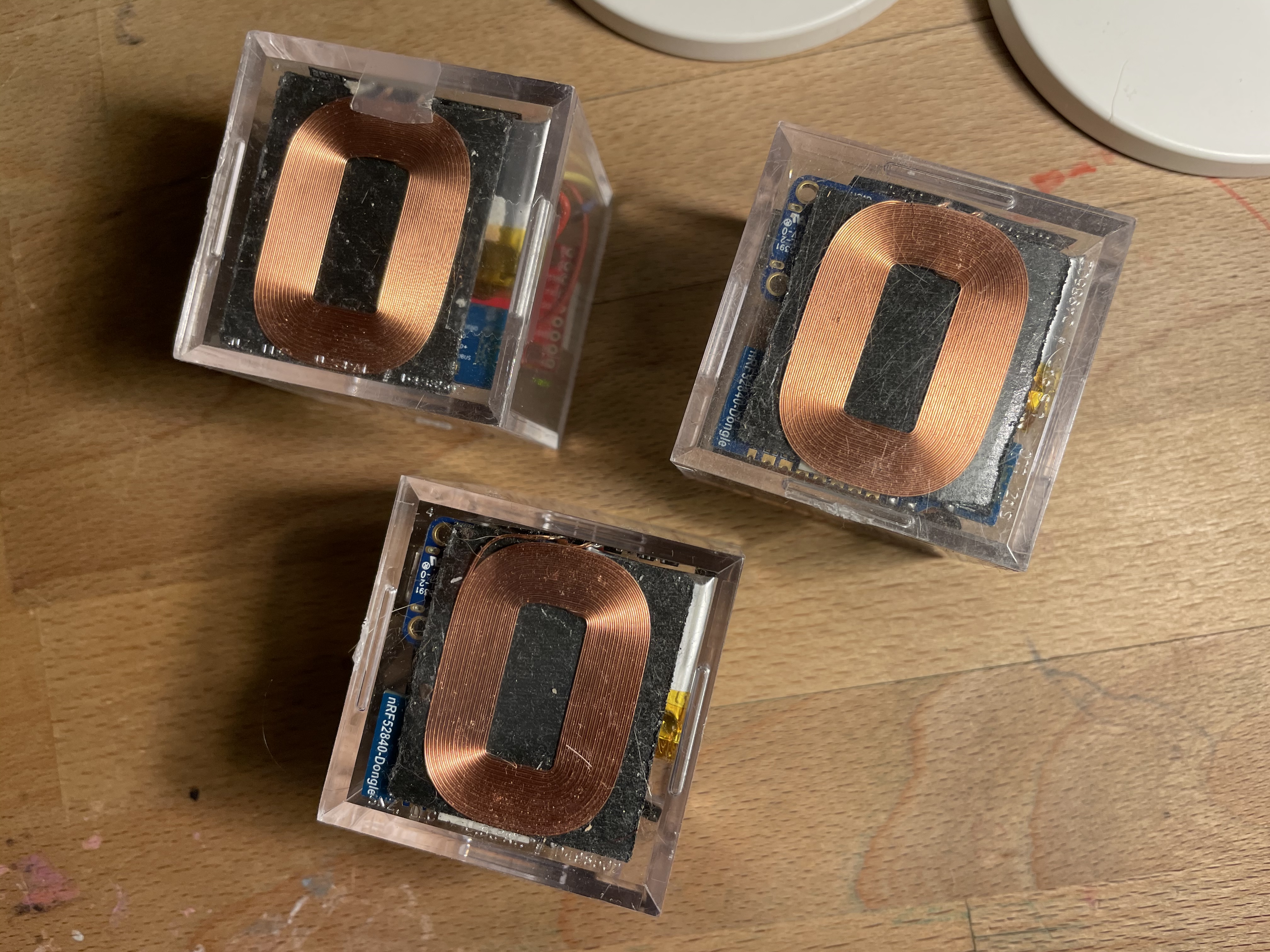
We don’t need to predict to understand what the future looks like as it is happening now. Advancements in manufacturing from the last decade allow for ultra-short productions. You can now create custom-printed circuit Boards with electronic components assembled at cost, CNC mechanical parts on demand, and 3D print structures and encasings at production quality. The only thing stopping a non-technical person from creating its products is the ability to design engineered blueprints or source code for the components. That’s where AI comes in.
While some AI forecasts paint a grim future, giving non-technical people the ability to create a well designed product (engineering-wise) is equivalent to giving musicians an electric guitar, the possibilities are infinite. What makes good products is not that they are technically sound; that is just a pre-requirement. Instead, a good product is something that people want to use. While many engineers have the ability to understand the user, there is usually some tension between what the engineer thinks the user needs and what the user wants.
Our job as engineers is far from over; the mission is to provide non-engineers working with AI with the building blocks to create anything they can come up with. Returning to the example of self-publishing media, the online platforms that allowed anybody to post anything didn’t just appear from nowhere; they were also created and maintained by teams of engineers.
The building blocks enabling everybody to build new Products will not be hobby-grade Do-It-Yourself kits. They will be fully engineered, tested, standardized, and continuously improved production-ready pieces of modular technology that AI will base its designs on to create blueprints and source code. Think of AI writing Python. Python’s standard library has been carefully crafted by thousands of engineers. AI writing a Python script is the culmination of all that effort. Now, extrapolate that to electronic, mechanical, and structural components. In a few years, we’ll see the rise of modular systems that AI will use to assemble almost anything in the real world. There will be many systems like this, but that’s a good thing; competition is healthy.
Same as the creation of the internet spawned a series of new jobs. Inevitably, we will see the rise of the Product+AI job descriptions. This person will be very well-versed in the different building blocks that AI can use to design products and their cost, the kind of prompt needed to describe the requirements to AI, and the best way to test and iterate the design results. And when everything looks good, this person will know how to send it to be produced for the market. The idea to launch cycle will be reduced from months to days without sacrificing quality. The concept of going to an electronics store to purchase a gadget designed by a big corporation to serve thousands of users with the exact same design will give way to a model where everybody gets the solution that solves their specific problem and requirements. This solution will be ordered online and shipped within the week after it has been designed, produced, and packaged in a local facility, with all the building blocks on the shelf waiting to be used. Welcome to the future =).



 Ricardo Cid's Blog